Access Restricted
The Gates of
Vancouver Island
How 2 million acres of public land became a private kingdom, and what it means for our future.
Unlock the Story How 2 million acres of public land became a private kingdom, and what it means for our future.
Unlock the StoryFor over a century, the backroads of Vancouver Island were open. Families camped by remote lakes, hunters tracked deer through second-growth firs, and locals explored the rugged interior.
Today, that tradition is dying behind private gates.
While only 5% of British Columbia is privately owned, the E&N Land Grant made Vancouver Island an exception—roughly 20% of the island is private land, much of it concentrated in the hands of a single forest management company controlling nearly 600,000 hectares.
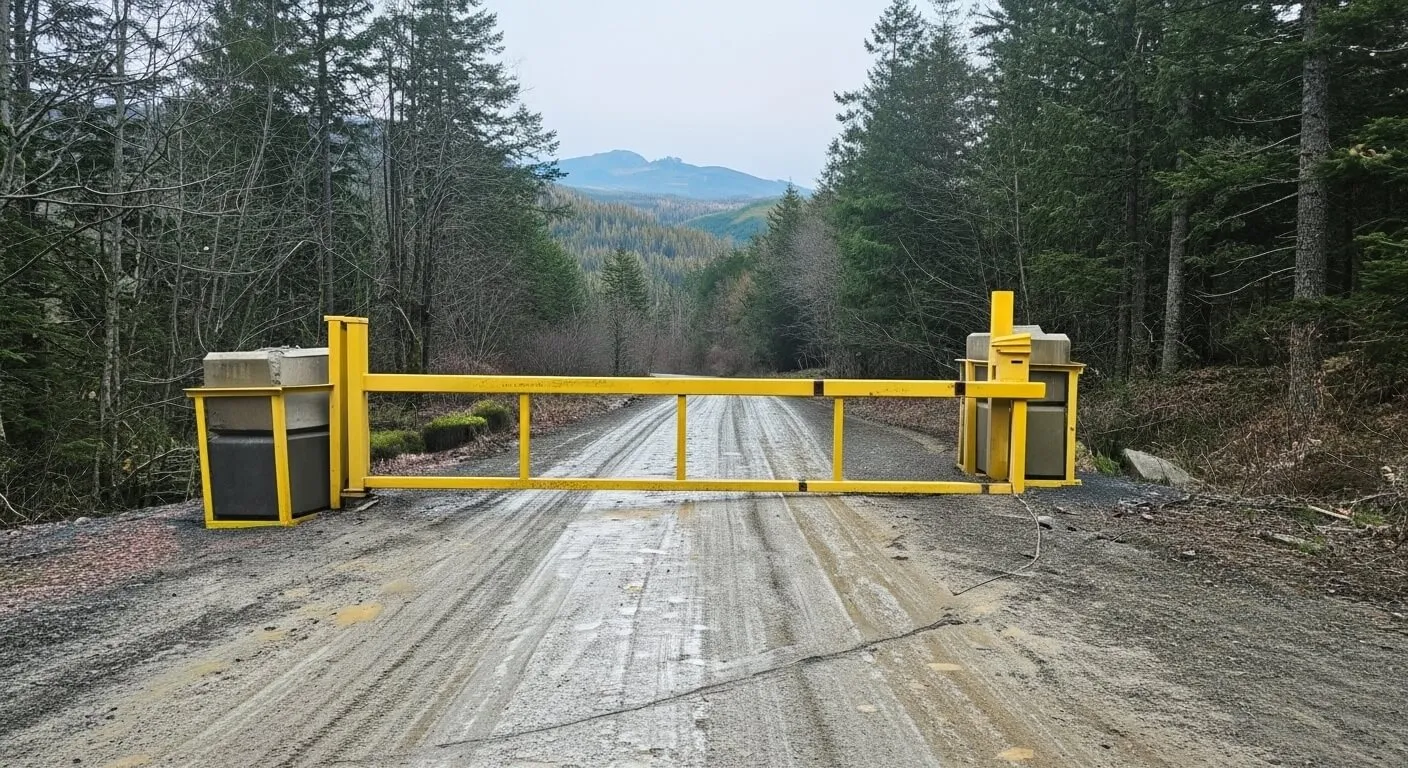
FIG 1.0 — A typical yellow gate blocking a logging road on Vancouver Island.
To finance the construction of the Esquimalt & Nanaimo Railway, the BC government grants 8,000 square kilometers (2 million acres) of Vancouver Island to coal baron Robert Dunsmuir and his investors. The grant includes all mineral and timber rights, privatizing a massive swath of traditional territories and public lands.
Corporate consolidation sees much of the land transferred to forestry giants like MacMillan Bloedel. Gates exist but are often left open on weekends for community access ("The handshake agreement").
Financialization of forests accelerates. Pension funds begin acquiring stake. The "working forest" concept shifts towards stricter asset management.
TimberWest and Island Timberlands affiliate under Mosaic Forest Management. A unified strategy for gate management is implemented, leading to a rapid increase in permanent gate installations.
Citing vandalism, fire risk, and safety, Mosaic restricts vehicle access across the majority of their network. A paid weekend access program is trialed but criticized heavily by locals.
The closure of Vancouver Island's backcountry has far-reaching impacts on diverse communities. Here are perspectives from those most affected.
"I've hunted these hills for 40 years with my dad. We respected the land. Now, there's a yellow gate at every turn. It feels like we've been evicted from our own backyard."
Local Resident & Hunter
"Eco-tourism and outdoor recreation businesses depend on predictable access. Uncertainty about gate status makes it difficult to plan routes and serve visitors."
Tourism Operator
"These lands are part of our traditional territories. Access restrictions hinder cultural practices and connection to our ancestral heritage."
Indigenous Communities
The solution isn't simple. It involves respecting private property rights while acknowledging the unique historical injustice of the E&N grant. Civic engagement is the path forward.
Ask your Member of the Legislative Assembly to review the Private Managed Forest Land Act and advocate for public access provisions.
Find Your MLASupport the grassroots organization dedicated to improving public access to Vancouver Island's backcountry.
Visit openthegates.ca